"It's up to you. It's your choice.”
I happened to overhear these words recently in a clothing store. A mother was speaking to her teenage daughter as they considered what to buy. "Whichever you like better is the one you can have. You choose.” I moved on, but the words stayed with me. How much of our lives is filled with choice? What kind of coffee will we have this morning? What will we wear? What will we eat? What car will we drive? Where will we live? What will we spend our money on? The number of choices available to us can seem almost limitless. We are surrounded by digital screens, shelves full of merchandise, advertisements, recommendations, opinions, and possibilities, all inviting us to choose. Yet a deeper question lies beneath all these choices. What does it actually mean to choose?
An important distinction exists between being presented with choices and consciously exercising the power of choice. We can make hundreds of decisions in a day without ever stopping to ask why we are making them. We may choose something because we have always chosen it, because everyone around us chooses it, because we have been taught to want it, because we fear choosing differently, or simply because an impulse arose within us. In such circumstances, there is certainly a choice being made, but how conscious is the chooser? This, I believe, points toward something fundamental about being human.
Human beings have the extraordinary capacity not merely to act, but to become conscious of our actions. We possess a remarkable capacity to reflect on our choices and consciously examine the forces that influence them. We can pause in the midst of an impulse and ask, “Why am I doing this?” We can examine a thought before accepting it, question a belief we have inherited, resist an instinct, or reconsider a decision. Perhaps this is one of the most important dimensions of what we mean by an individualized consciousness.
In contrast to the animal world, a distinctive quality of human consciousness is our capacity to turn awareness back upon ourselves: to observe our own impulses, question our own thoughts, and consciously choose whether to follow them. We can ask not only “What am I doing?” but “Why am I doing it?” and even “Do I want to become the kind of person who does this?” This capacity for self-reflection and deliberate choice is one of the defining qualities of human consciousness.
Many things within us operate automatically. We become hungry and seek food. We become tired and seek rest. We experience fear and instinctively move away from danger. We develop habits, preferences, and patterns of response. These automatic tendencies are not necessarily wrong. Indeed, many of them are essential to life, but human consciousness gives us the possibility of something more. We can notice an impulse without immediately obeying it, ask whether a thought that has arisen in us is actually our own, choose whether to follow the familiar path or to step outside it. This is where the simple expression "Think for yourself" becomes much more profound than it first appears. It is an expression that speaks directly to the power of individualized choice. Yet it is easy to surrender that power without realizing it, by absorbing the opinions, assumptions, and impulses of the crowd around us. We may feel that we are choosing for ourselves when, in fact, we are being carried along by influences we have never consciously examined. It is interesting, in this context, that “a crowd” can be rearranged to spell the word “coward.” Perhaps the deeper courage is to remain sufficiently conscious to stand apart from others when necessary, because we have had the courage to consciously choose for ourselves.
To think for ourselves does not necessarily mean rejecting everything others believe. Nor does it mean assuming that our own opinions are automatically correct. It means becoming sufficiently conscious to examine what we have been given. What have we accepted simply because we were told it was true? What do we desire because we genuinely desire it, and what do we desire because we have been taught to desire it? Which of our beliefs have we consciously chosen, and which have we simply inherited? And perhaps most importantly, are we choosing, or are we being carried along? This question becomes particularly important when we consider the power of collective influence. Every society has powerful signals that tell us what is desirable, acceptable, successful, admirable, or frightening. Advertising can influence what we want; social groups can influence how we think; political movements can influence what we fear; and religious and cultural traditions can influence what we believe. None of this necessarily means that these influences are deliberately deceptive, but influence is influence, whether we recognize it or not. The danger comes when we mistake influence for independent thought.
There is an important difference between having many choices and being conscious of our choice. The modern world offers us an extraordinary abundance of the first. The deeper challenge is to develop the second, which brings us to the much deeper choices of human life. We can choose our breakfast without much consequence. We can choose what clothes to wear, what car to drive, or what entertainment to watch. These choices may matter to us, but they generally do not determine the deepest direction of our lives. Other choices are different. What kind of person am I becoming? What purpose will I give my life? What values will govern my actions? What will I do with the consciousness I have been given? Will I simply follow the patterns around me, or will I make the effort to discover what is genuinely true for me? And, for those of us who look beyond the physical dimension of existence, there are still deeper questions. Is human life part of a larger spiritual purpose? Does consciousness continue beyond physical death? If it does, is there something I can do now that affects what becomes possible for me then?
These are not questions that can be answered by choosing between products on a store shelf. They require another kind of choice altogether—the choice to become sufficiently conscious to ask them. Perhaps this is why the words I overheard in that clothing store stayed with me. "It's your choice.” At first, the words referred simply to a piece of clothing, but they carry a much larger truth. We are constantly choosing. The question is not whether we choose, but how consciously we choose. Some choices arise from habit. Some from instinct. Some from fear. Some from the expectations of others. Some from the powerful currents of the culture around us. Some choices arise from a deeper place—from the quiet capacity within us to stop, observe, question, and decide. That capacity is worth protecting.
As I left the shopping mall, surrounded by advertisements and invitations to buy, I found myself thinking again about those simple words: "You choose.” Perhaps the most important choice is not between one product and another but to become conscious of what within us is doing the choosing. Perhaps it is to think for ourselves, examine what moves us, recognize when we are being carried by the crowd, and ultimately, to ask what we are doing with the extraordinary ability we have been given to shape the direction of our own lives. Because if our lives are, in some meaningful sense, our choice, then it may be that one of our greatest responsibilities—and one of the greatest gifts—is to become conscious enough to understand what we are choosing. In the end, one of the deepest questions may not be, “What is my choice?” but “Who am I becoming through the choices I make?” Perhaps the real power of choice is not that it allows us to decide what we will have, but that it allows us to participate consciously in what we will become. And this may be where the deepest journey of being human begins…
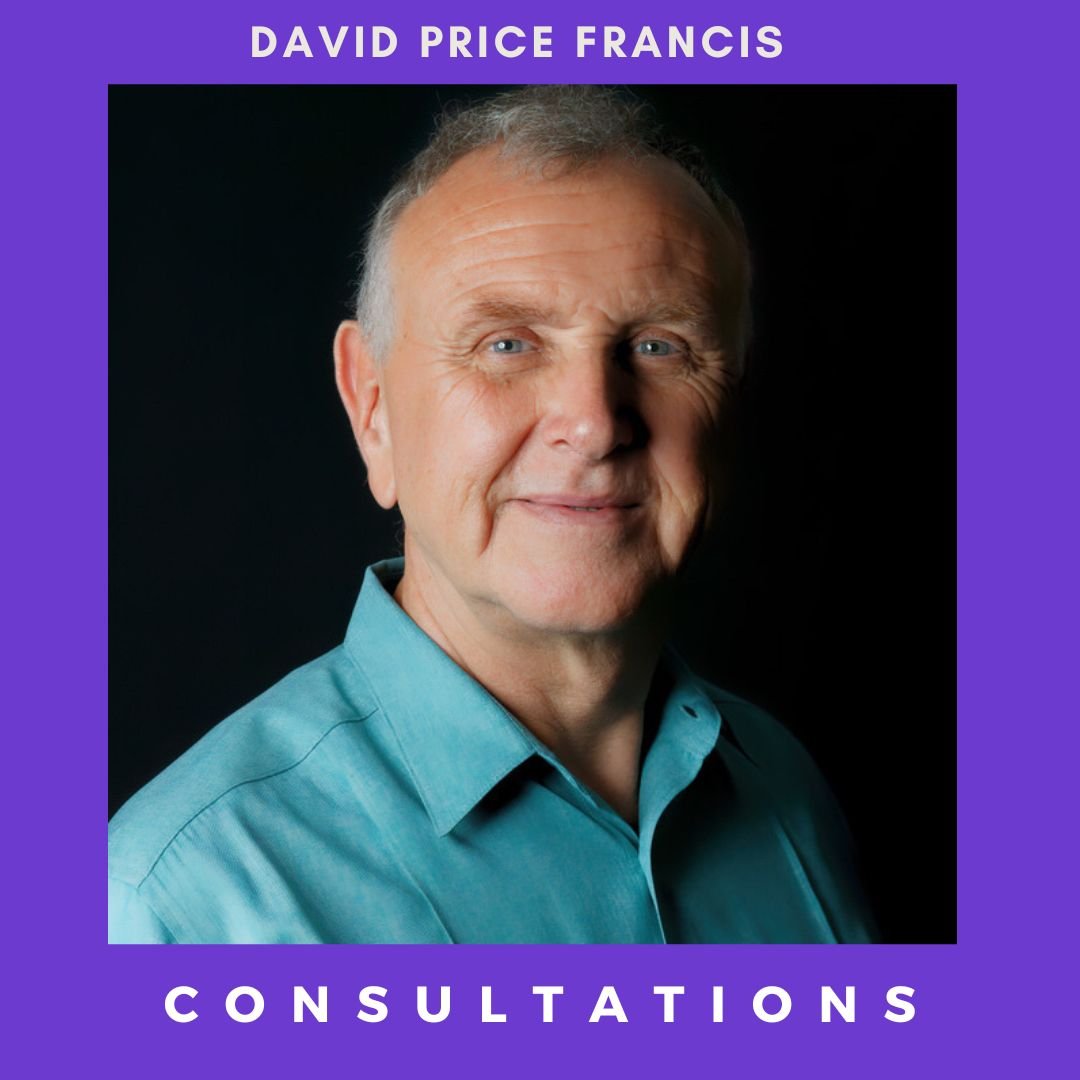
Connect with David here- http://www.energyworlds.com/