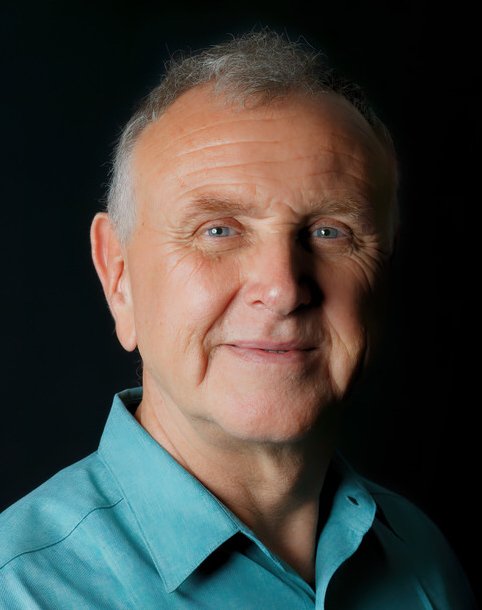
Sander Funneman began his career teaching general economics and statistics in higher professional education. As a research journalist he has focused on the electric side of life for several decades and has published various intriguing books on the subject, including ‘Electric Ecosystem’ and ‘Electric Context’. He has also co-authored with scientists and experts on areas such as the bioelectric features of trees, and regularly contributes to the Dutch magazine ‘Optimist’. Additionally, he is an international public speaker who covers a wide range of topics concerning the natural templates that govern life. Sander lives in the Netherlands.
Interview with Sander Funneman by Ian Snowball – December 2025
Where did the interest or fascination for the electric side of life come from?
Before I started my studies in general economics and statistics, I first wanted to do something with my hands. Something practical. So I got my basic training in working as an electrician. That turns out to be relevant for the story of how Electric Life came about.
Much later, on a warm summer evening in 1986, I attended a lecture - which I remember quite well because my wife Anne-Marie and I received a handout which carried the thought provoking title, Everything works by electricity and magnetism. If it had read that ‘some’ things in nature ‘may’ work through electricity and magnetism, I probably would have dropped the issue there and then, and never thought about it anymore. But…‘everything’? That was totally inconsistent with my frame of reference. Nowadays, ‘bioelectromagnetism’ is a short query to google. That wasn't possible in 1986. There was no internet, no Wikipedia, no ChatGPT. My only source was the library.
During school and my studies, I had learnt and accepted the physicochemical way of looking at reality. And the only way to get past this was research. I thought surely there would be things that didn’t work through electricity and magnetism. Another aspect relating to this was that both my parents taught me to highly respect fundamental and unbiased research and discovery. They encouraged me to love the truth more than yourself. With that background, I ended up in the lecture, receiving the handout which argued something that did not fit with what I had learned up to that point. But I knew that it was not about me and what I had learned. It was about whether or not it was true. And because I could not answer that, it kept nagging me, like a pebble in my shoe that was there to stay.
How did you start the research? Can you give us an idea of what the process was like and what you discovered?
Well, I started with low hanging fruit. It was clear that the heart, the nerves and the brain possess various electromagnetic properties. The same turned out to be true for the muscles, the way bacteria form a biofilm, the way birds navigate, embryos grow and plants communicate. Also, all sorts of questions arose - about, for instance, gravity. Are there electromagnetic aspects about gravity?
Once the collecting had begun, I decided to dedicate a large sturdy cardboard box to the subject. It had held pickle jars, and fitted exactly under our bed. That box slowly got filled with clues. Of course, common references went in about the method by which the electrical activity of the brain and the heart is measured, the EEG and ECG. Then a reference went in about how potato plants, under the influence of a magnetic field, grow into much larger plants with heavier potatoes. A reference also went in about the observation that the electrical charge of a raindrop increases when clouds get warmer.
Later, an excerpt that found its way into the box came from Frances Ashcroft. In her wonderful book, The Spark of Life, she describes the fundamental difference between electricity that powers the bodies of humans and animals, and the electricity we use to light our cities at night. The electricity in the wires in the walls is carried by fast electrons, while slow electricity, carried by ions, runs through the animal kingdom.
As the pickle box, through the 1990s, became increasingly filled with newspaper clippings, pictures and copies, the smell of pickles gradually disappeared. Besides the method of measuring the electrical side of the head and heart, instruments were also developed to measure their magnetic fields. Collecting more and more scientific evidence on this, I began to realise that every thought, every feeling, every memory, and the composition of our consciousness, seemed to be made up of electromagnetic fields. Gradually, this process of increasing perception started to heal my ignorance about the electric side of life.
As you were gathering all this material and the electric side of life started to grow on you, at what point did you decide to write about it?
There was never the ambition or the intention in me to write a book about this. The electricity and magnetism was simply one of the many things that I was – and am – working on in a private search for truth. But at some point I began to feel responsible for the weave of perceptions that had started to occur. And for many reasons it became inevitable, as a research journalist, to start writing about these, and reporting about them, as objectively as I humanly could.
I began to realise that the electric side of life on Earth is actually increasing, and that virtually everything in the ecosystem and in our own body works by subtle frequency-specific electrical phenomena. This brought a sense of deeper motivation to start publishing about it. The perspective of the electric foundations of life opened up every conceivable aspect of existence.
To give some more examples. I discovered that human health might be very dependent on the daily input of electrons from the Earth, that there is a powerful way to improve agricultural results by using atmospheric electricity, and that it is possible to revive coral reefs by recognising that they are electric ecosystems. Then I discovered that water has an electric life that needs nurturing, and that we need the influence of the electric frequencies from lightning as much as we need food, water and air. Also, it appeared that artificial radiation impacts humans, animals and plants, and that bacteria are sensitive to electricity and magnetism in such a way that this sensitivity can be used in healing practices and therapies. Above all, it was quite stunning to learn that the natural electric side of life on Earth is actually exponentially increasing.
How did you come to the title ‘Electric Life, the hidden radiance of everything’, and where did you find the illustrator that could do this?
I proposed the main title, and the subtitle actually came from Mark Siegel who is creative and editorial director of 23rd Street Books. In close communication with Mark, Electric Life came into existence. He read my first two books, Electric Ecosystem and Electric Context, and contacted me in 2020 with his vision for a graphic novel. We agreed that it would need to become an ode to the unseen and unknown dimensions of the natural worlds. It would need to become something inspiring, positive, hopeful and contagious.
Then the journey began to find an illustrator – someone who could think outside the box, grasp the science, and had a passion for the natural world. When we met Peter in early 2021, he was very keen to understand what the book was about. From the beginning he dedicated himself, for example, to learning things about biology, physics and astronomy, to be able to visualise aspects that are in fact unseen. Even the initial sketches or thumbnails were amazing and helped me to deepen my understanding of the unseen worlds of electricity and magnetism. Actually, in working together with Peter, I came to realise that universities would hugely benefit from integrating with art academies.
What do you hope to cause with Electric Life? Where do you hope it will leave your readers?
In the graphic novel Electric Life an avalanche of insights is opened up and visualised. It sheds light on the natural energetic side of life, and shows how everything is connected and integrated with each other, from the small microbes to the large cosmos. I hope that reading the book may increase the awe and wonder about nature, which includes us humans!
With help from many people, we created a special website https://electriclifebook.com/ where the scientific evidence about the content of the book is made available, chapter by chapter. Also, we have started to publish background articles on various subjects that could only briefly be touched upon in the book. Ultimately, I hope that this work may contribute to opening some inspiring doors to the electric reality of living. Because I believe many people, from any age between eight and 95, can benefit from these insights.
And who knows, perhaps it might ignite a global exploration into all the implications of Electric Life, way beyond my current understanding. That’s why I’m sharing what I’ve got so far. For still today, this research is like discovering a continent that is yet largely unexplored.
Electric Life is now published in English and Dutch, and will also appear in Chinese, German and other languages. I understand that you are going to facilitate two international online workshops for interested people in 2026. Can you tell us a bit about that?
The online events are called feeling tomorrow’s electrics today. I am very happy that Ruth Hill and Simon Small from the UK, are willing to join us in this, because they have developed extraordinary skills to enliven perceptions through practical exercises and ways of working with the body’s natural energy systems. I am inspired about teaming up with them, as it enables a connection between understanding and experience.
If there are people who might be interested in joining these online workshops, they can find out more on the Event Calendar on www.electriclifebook.com or go to https://futureforward.net/